
Choosing the right thumbnail design can make or break your YouTube video's performance. With millions of videos competing for attention, creators face intense pressure to craft thumbnails that stop scrollers and drive clicks. This article provides a data-backed framework for evaluating thumbnail design types, examining proven strategies that maximize click-through rates and viewer engagement. You'll discover key criteria for effective designs, explore popular thumbnail categories with real performance data, and learn actionable steps to select and test designs that align with your channel's unique audience and content style in 2026.
Table of Contents
- Criteria For Choosing Effective Thumbnail Designs
- Types Of Thumbnail Designs: Overview And Examples
- Comparing Thumbnail Design Strategies: Testing And Trends In 2026
- How To Choose The Right Thumbnail Design For Your Channel
- Boost Your Video Engagement With Expert Thumbnail Design
Key takeaways
| Point | Details |
|---|---|
| Design impacts performance | Thumbnail quality directly influences click-through rates and overall video engagement metrics |
| Testing drives results | A/B testing reveals which design elements resonate most with your specific audience |
| Niche determines style | Different content categories require tailored thumbnail approaches for maximum effectiveness |
| Mobile optimization matters | Ensuring clarity on small screens is essential since most viewers watch on mobile devices |
| Consistency builds recognition | Maintaining visual branding across thumbnails increases channel recognition and trust |
Criteria for choosing effective thumbnail designs
Successful thumbnail selection starts with understanding the technical and visual elements that drive performance. The foundation begins with proper dimensions: use 1280x720 pixels at a 16:9 aspect ratio to ensure your thumbnail displays correctly across all devices and platforms. This standard format prevents cropping issues and maintains visual integrity whether viewers browse on desktop or mobile.
Color psychology plays a crucial role in capturing attention. High-contrast color combinations create visual pop that makes thumbnails stand out in crowded feeds. Red signals urgency and excitement, blue conveys trust and professionalism, while yellow grabs attention and suggests optimism. Strategic color choices should align with your content's emotional tone while ensuring readability against YouTube's interface.
Text overlay requires careful restraint. Limit thumbnail text to zero to four words maximum, using bold sans-serif fonts that remain legible at small sizes. Excessive text clutters the design and becomes unreadable on mobile screens. Instead, let compelling visuals carry the message while minimal text reinforces the core concept.
Composition fundamentals matter significantly. Apply the Rule of Thirds by positioning key elements along imaginary grid lines that divide your thumbnail into nine equal sections. This creates natural visual hierarchy and guides viewer attention to focal points. Place faces or primary subjects at intersection points for maximum impact.
Mobile optimization cannot be overlooked. With 70% of YouTube watch time occurring on mobile devices, your thumbnail must communicate clearly at tiny sizes. Test designs on actual phone screens before publishing. Elements that look crisp on desktop often blur or disappear when compressed to mobile dimensions.
Brand consistency delivers measurable results. Consistent branding boosts CTR 15-20% by creating instant recognition among your audience. Develop a signature style using recurring color schemes, fonts, or layout patterns that viewers associate with your channel. This recognition factor reduces decision friction and increases click likelihood when your videos appear in recommendations.
Pro Tip: Create a thumbnail template with your brand elements locked in place, then customize variable elements like images and text for each video to maintain consistency while allowing creative flexibility.
Types of thumbnail designs: overview and examples
Face-focused thumbnails dominate YouTube performance metrics across most content categories. These designs feature expressive human faces displaying clear emotions like surprise, excitement, curiosity, or concern. The psychological connection viewers feel with facial expressions creates powerful engagement triggers. Close-up shots that fill the frame work best, with subjects making direct eye contact with the camera. Gaming creators, vloggers, and reaction content producers rely heavily on this approach because faces convey authenticity and emotional resonance that static graphics cannot match.
Faceless thumbnails offer viable alternatives for specific niches and content types. These designs emphasize objects, products, screenshots, or AI-generated imagery rather than human subjects. Gaming channels frequently use character renders, gameplay screenshots, or stylized graphics that represent the video's content. Tech reviewers showcase devices or software interfaces. Tutorial creators display finished projects or key process steps. This approach works particularly well when the content focuses on things rather than personalities.
Minimalist designs represent a growing trend in 2026. These thumbnails strip away visual clutter, using clean compositions with ample negative space, simple geometric shapes, and restrained color palettes. The aesthetic communicates professionalism and sophistication while ensuring instant comprehension. Educational channels, productivity content, and business-focused creators adopt minimalist styles to project authority and clarity. The reduced visual noise helps these thumbnails stand out against busier competing designs.
Action-centric thumbnails capture dynamic moments that suggest movement, conflict, or dramatic events. Gaming favors action and characters with 8.5% CTR, while educational needs clean designs with 4.5% CTR. Sports highlights, gaming montages, and challenge videos benefit from freeze-frames showing peak action moments. Motion blur, dramatic lighting, and explosive visual effects amplify the sense of energy and excitement.
Text-heavy thumbnails prioritize bold statements or questions that promise specific value. These designs feature large, readable text as the primary element, often paired with simple background graphics or subtle imagery. List videos, how-to guides, and explainer content use this format to communicate clear value propositions. The text itself becomes the hook, promising concrete information or solutions that compel clicks.
Hybrid approaches combine multiple elements for comprehensive communication. A creator might pair an expressive face with bold text overlay and branded graphics, creating layered visual interest that appeals to different viewer preferences. This versatility allows for nuanced storytelling within the thumbnail format, though it requires careful balance to avoid visual overload.
Comparing thumbnail design strategies: testing and trends in 2026
Rigorous A/B testing separates successful creators from those relying on guesswork. YouTube Test & Compare is crucial for validating design decisions with real audience data. The platform's built-in testing feature allows creators to upload multiple thumbnail variants and automatically rotates them to measure performance differences. Focus testing on high-impact variables like background colors, facial expressions, text placement, or the presence versus absence of specific elements. Top creators like MrBeast reportedly test dozens of thumbnail variations, investing significant resources to identify winners before committing to a final design.
The face versus faceless debate continues generating discussion in creator communities. While facial thumbnails deliver strong engagement across broad audiences, the requirement isn't universal. Faceless designs succeed when the content's subject matter naturally emphasizes objects, concepts, or anonymous expertise. Gaming channels featuring popular characters, tutorial content showcasing finished products, or tech reviews highlighting devices can thrive without human faces. The key lies in understanding whether your audience connects more with personality or content substance.
Minimalist aesthetics gain momentum as viewers experience thumbnail fatigue from overstimulated designs. Clean compositions with strategic white space create visual breathing room that paradoxically captures attention by contrasting with surrounding clutter. This trend particularly resonates with professional audiences seeking authoritative, no-nonsense content. However, minimalism requires exceptional execution since fewer elements mean each component carries greater weight.
AI-generated thumbnails emerge as both opportunity and controversy. Artificial intelligence tools enable rapid creation of custom imagery, characters, and scenes impossible or expensive to photograph. Creators without photography skills or budgets for photo shoots leverage AI to produce polished visuals. Critics argue AI thumbnails lack authenticity and may deceive viewers about content nature. The technology's role will likely expand while platform policies and audience expectations continue evolving.
Motion preview thumbnails represent experimental frontier territory. Some platforms test animated thumbnail previews or GIF-style loops that play when users hover over videos. While YouTube hasn't fully implemented this feature, forward-thinking creators prepare for potential changes by considering how their static designs might translate to brief motion sequences.
Clickbait avoidance becomes increasingly critical for algorithm favorability. Misleading thumbnails that promise content not delivered in the video trigger viewer abandonment, poor retention metrics, and algorithmic demotion. YouTube's systems increasingly penalize deceptive practices while rewarding authentic representation. The most sustainable strategy balances attention-grabbing design with honest content preview.
Pro Tip: Document your testing results in a spreadsheet tracking thumbnail variants, CTR percentages, and audience demographics to identify patterns that inform future design decisions.
How to choose the right thumbnail design for your channel
Start by analyzing your niche's visual landscape. Study the top 20 channels in your category, examining their thumbnail patterns, color schemes, text usage, and compositional approaches. Identify common elements that signal content type to your target audience while noting opportunities to differentiate your brand. Understanding established visual language helps you communicate effectively while strategic variations create memorable distinction.
Implement structured A/B testing as a non-negotiable practice. Begin with your current thumbnail as the control, then create variations testing single variables like background color, facial expression, or text phrasing. Run each test for at least 48 hours and several thousand impressions to gather statistically meaningful data. Prioritize aligning thumbnails with content to maintain viewer trust and algorithm favor. Avoid testing too many variables simultaneously, which makes isolating performance drivers impossible.
Maintain brand consistency through repeating visual signatures. Select two to three primary colors that represent your channel's personality and use them consistently across thumbnails. Choose one or two fonts that become recognizable markers of your content. Consider incorporating a small logo, border style, or graphic element that appears in the same position on every thumbnail. This consistency builds subconscious recognition, making your videos instantly identifiable in crowded recommendation feeds.
Conduct mobile testing before publishing any thumbnail. Email yourself the design and view it on your actual smartphone at the size it appears in YouTube's mobile app. Verify that faces remain recognizable, text stays readable, and the overall composition communicates clearly. Elements that work beautifully on desktop monitors often fail completely when compressed to mobile dimensions. Since mobile dominates viewing patterns, this step determines real-world performance.
Balance trend adoption with authentic channel personality. While following proven patterns provides baseline effectiveness, pure imitation creates generic content that fails to build unique audience connections. Incorporate trending elements that genuinely fit your style while preserving distinctive brand characteristics. Your thumbnail should feel current yet unmistakably yours.
Avoid misleading or sensationalized designs that promise content you don't deliver. Clickbait might generate initial clicks but destroys retention metrics when viewers feel deceived. Poor retention signals algorithm systems to reduce your video's promotion, ultimately harming channel growth. Build sustainable success through thumbnails that accurately preview content while maximizing genuine interest.
Boost your video engagement with expert thumbnail design
Creating consistently high-performing thumbnails requires design expertise, testing resources, and ongoing optimization that many creators struggle to maintain alongside content production demands. Professional thumbnail design services deliver data-driven visuals tailored to your specific niche, audience demographics, and channel brand. Expert designers understand the psychological triggers, compositional principles, and technical requirements that separate average thumbnails from click-generating powerhouses.
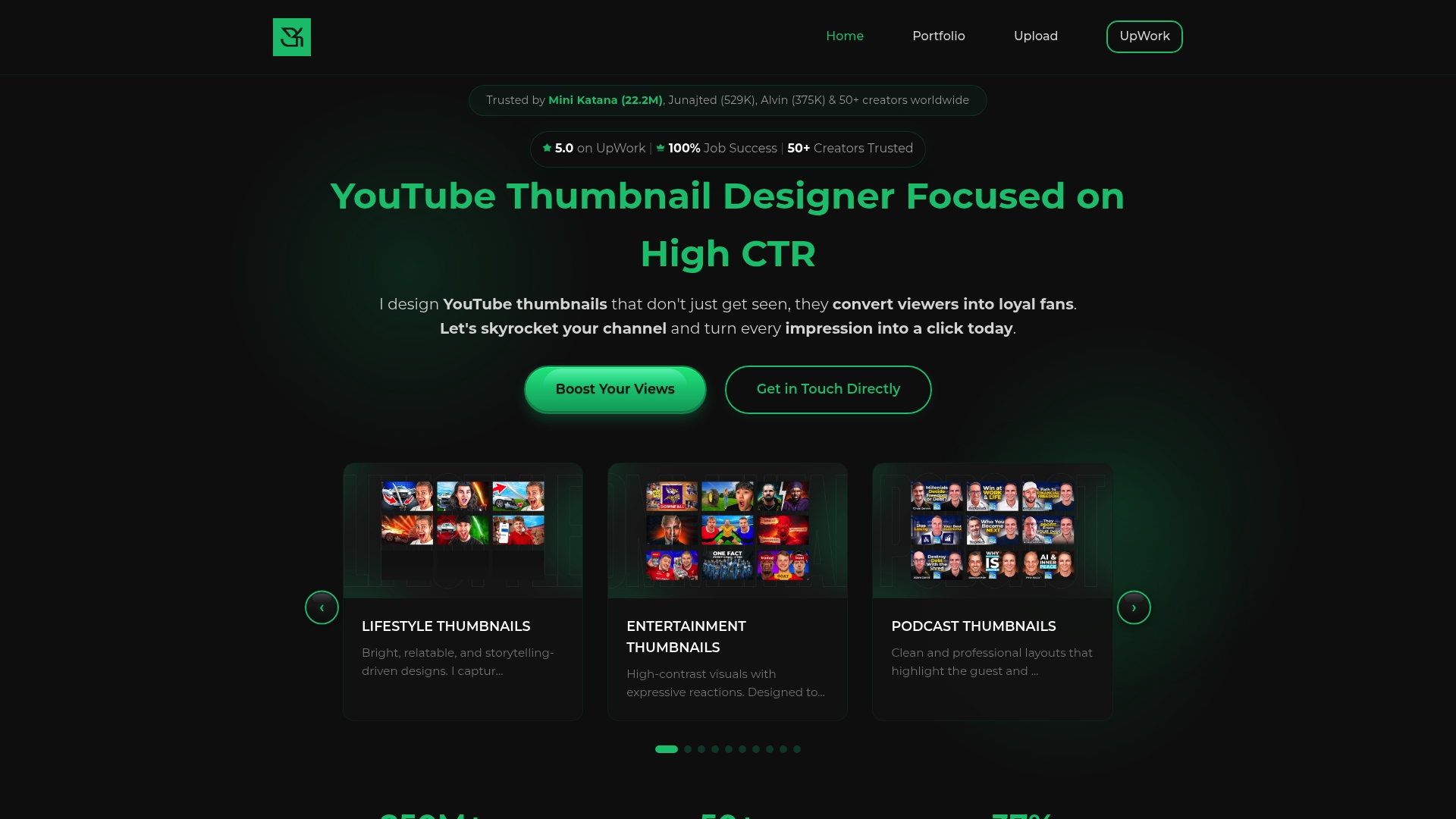
Partnering with specialized YouTube thumbnail designer professionals saves valuable time while improving results through systematic testing and refinement. Design experts stay current with platform changes, emerging trends, and performance data across thousands of channels. They bring fresh creative perspectives that help established channels break through performance plateaus. Whether you're launching a new channel or optimizing an existing presence, high CTR thumbnails created by specialists provide competitive advantages in YouTube's attention economy. Invest in custom thumbnail design services to transform your video performance and accelerate channel growth through proven visual strategies.
FAQ
What resolution should YouTube thumbnails be?
Use 1280x720px (16:9 aspect ratio) for optimal display across all devices and platforms. This resolution ensures your thumbnail appears crisp on desktop computers, tablets, and mobile phones without cropping or distortion. Save files as JPG or PNG format, keeping file size under 2MB to meet YouTube's technical requirements. Higher resolution images get automatically compressed by YouTube's systems, potentially degrading quality, while lower resolutions appear pixelated and unprofessional.
Is it better to include a face in my thumbnail?
Faces increase CTR by 62% across most content categories by creating emotional connections with viewers. However, faceless thumbnails can work well in niches like gaming or when featuring compelling objects, products, or AI-generated imagery. The decision depends on whether your audience connects more with personality or content substance. Test both approaches with your specific audience to determine which drives better performance for your channel.
How can I test which thumbnail design works best?
Use YouTube Test & Compare for A/B testing by uploading multiple thumbnail variants that the platform automatically rotates to measure performance differences. Run tests for at least 48 hours and several thousand impressions to gather statistically meaningful data. Focus on testing single variables like background color, facial expressions, or text placement rather than changing multiple elements simultaneously. Document results to identify patterns that inform future design decisions and continuously improve your thumbnail strategy.
How much text should I include on thumbnails?
Limit thumbnail text to zero to four words maximum using bold, sans-serif fonts that remain legible at small sizes. Excessive text clutters designs and becomes unreadable on mobile screens where 70% of viewing occurs. Let compelling visuals carry your message while minimal text reinforces core concepts. When text is necessary, ensure high contrast between text color and background, use large font sizes, and position words strategically using compositional principles like the Rule of Thirds.
Should I follow trending thumbnail styles or create unique designs?
Balance trend adoption with authentic channel personality for optimal results. Incorporating proven patterns provides baseline effectiveness and helps your content feel current and relevant. However, pure imitation creates generic thumbnails that fail to build distinctive audience recognition. Study successful channels in your niche to understand visual language expectations, then add unique brand elements like signature colors, fonts, or compositional styles that make your videos instantly identifiable in crowded feeds.