
You design a thumbnail, upload your video, and assume you're safe because you created it. But what if you used a celebrity photo, a copyrighted font, or a stock image without permission? Many creators believe thumbnails are exempt from copyright rules or that adding a disclaimer protects them. This guide clarifies what thumbnail copyright actually means, when it applies, and how to protect your channel from infringement claims while maximizing your creative freedom.
Table of Contents
- What Is Thumbnail Copyright And When Does It Apply?
- Common Copyright Infringement Risks For Thumbnail Creators
- Understanding Fair Use And Its Limits For Thumbnails
- How To Legally Create And Use Thumbnails On YouTube In 2026
- Get Professional, Copyright-Safe Thumbnails Designed For Maximum Impact
Key takeaways
| Point | Details |
|---|---|
| Original thumbnails are copyrighted | Thumbnails with creative elements like custom graphics or photos automatically receive copyright protection under U.S. law. |
| Unauthorized use risks penalties | Using copyrighted images, fonts, or likenesses without permission can result in YouTube strikes, video removal, or legal action. |
| Fair use is not guaranteed | Fair use may protect transformative thumbnail uses, but it depends on four legal factors evaluated case by case. |
| Credits don't replace licenses | Adding credit or disclaimers in descriptions does not prevent copyright infringement claims or provide legal protection. |
| YouTube enforces copyright strictly | Automated systems and manual reports scan thumbnails for unauthorized content, leading to channel penalties for repeat violations. |
What is thumbnail copyright and when does it apply?
Thumbnails serve as visual gateways to your videos, condensing your content into a single compelling image. When you create a thumbnail with original creative elements like custom illustrations, unique photo compositions, or distinctive text layouts, that work qualifies for copyright protection the moment you fix it in a tangible form. Copyright law doesn't require registration or special notices for protection to kick in.
Original creative elements trigger automatic copyright. These include photographs you took yourself, graphics you designed from scratch, custom typography arrangements, or illustrations you drew. Even combining stock elements in a unique way can generate copyright protection if your arrangement demonstrates creativity. The threshold for originality is low, but it exists. A simple screenshot with no modifications likely won't qualify, while a screenshot enhanced with arrows, text overlays, and color adjustments probably will.
Generic thumbnails present a gray area. If you use completely unmodified stock photos with standard fonts and no creative arrangement, copyright protection becomes questionable. Stock image licenses grant you usage rights, but the underlying copyright belongs to the photographer or agency. Your thumbnail might not be independently copyrightable if it lacks original creative input. This matters when someone copies your thumbnail because you'll have limited legal recourse without demonstrable originality.
Understanding your rights as a creator protects your work and respects others' rights. When you produce original thumbnails, you own the copyright and can control how others use your images. You can license your thumbnails, prevent unauthorized copying, or pursue infringement claims. Conversely, respecting others' copyrights means obtaining proper permissions before using their creative work. A YouTube thumbnail designer can help you navigate these complexities while creating compelling, legally compliant visuals.
Pro Tip: Document your creative process by saving draft versions and source files. This evidence proves originality if you ever need to defend your copyright or dispute an infringement claim.
Common copyright infringement risks for thumbnail creators
YouTubers face infringement risks the moment they incorporate unauthorized copyrighted material into thumbnails. Using someone else's photograph without permission constitutes direct infringement, regardless of how much you modify it. Cropping, applying filters, or adding text doesn't transform a copyrighted photo into fair use automatically. The original photographer retains exclusive rights to reproduce, distribute, and create derivative works from their image.

Logos and brand marks create particularly dangerous infringement scenarios. Featuring a recognizable company logo in your thumbnail without authorization violates trademark rights and potentially copyright. Even if you're reviewing a product or discussing a brand, using their logo requires careful fair use analysis. Commentary and criticism may provide some protection, but commercial thumbnail use often fails the fair use test. Font licensing presents another overlooked risk. Many commercial fonts restrict usage to specific contexts, and thumbnail use might exceed your license terms.
Personal likenesses introduce both copyright and right of publicity concerns. Using someone's face or identifiable image without consent can trigger multiple legal claims. Celebrities and public figures maintain strong publicity rights over their likenesses, and unauthorized commercial use in thumbnails violates these rights. Even non-celebrities possess privacy rights that protect against unauthorized commercial exploitation of their image. The fact that someone appears in publicly available photos doesn't grant you permission to use those photos.
Disclaimers provide zero legal protection despite their popularity among creators. Writing "no copyright infringement intended" or "all rights belong to the owner" doesn't prevent infringement claims or absolve liability. Copyright infringement is a strict liability offense, meaning intent doesn't matter. If you use copyrighted material without permission or a valid legal exception, you've infringed regardless of your stated intentions. These disclaimers might demonstrate good faith, but they hold no legal weight in infringement disputes.
YouTube's copyright framework applies equally to thumbnails and video content. The platform uses automated systems and manual reports to identify unauthorized material. Copyright holders can submit takedown notices for infringing thumbnails, triggering strikes against your channel. Three strikes within 90 days results in channel termination. Even a single strike restricts your ability to upload content, live stream, or monetize videos. Repeat infringement demonstrates a pattern of misconduct that YouTube treats seriously.
Pro Tip: Before using any image, ask yourself three questions: Did I create this? Do I have written permission? Does my use clearly qualify as fair use? If you answer no to all three, find a different image.
The legal consequences extend beyond YouTube penalties. Copyright holders can pursue statutory damages ranging from $750 to $30,000 per infringement, or up to $150,000 for willful violations. Even if a copyright holder doesn't pursue maximum damages, legal defense costs can devastate individual creators. Small claims and settlement demands create financial pressure that many YouTubers can't sustain. Prevention through proper licensing and original creation costs far less than defending an infringement lawsuit.
Understanding fair use and its limits for thumbnails
Fair use provides a legal defense against copyright infringement claims when your use serves specific purposes like criticism, commentary, news reporting, teaching, or parody. This doctrine recognizes that rigid copyright enforcement would stifle creative expression and limit public discourse. However, fair use operates as an affirmative defense you must prove in court, not a blanket permission to use copyrighted material freely. Courts evaluate four statutory factors to determine whether a particular use qualifies as fair.
The first factor examines the purpose and character of your use. Transformative uses that add new meaning, expression, or message receive stronger fair use protection than mere reproduction. Commercial purposes weigh against fair use, though they don't automatically disqualify it. A thumbnail that comments on or criticizes the original work demonstrates more transformative purpose than one that simply repackages the content. The second factor considers the nature of the copyrighted work. Using highly creative works like photographs or artwork receives less fair use protection than using factual compilations. Published works receive less protection than unpublished materials.
The third factor assesses the amount and substantiality of the portion used. Taking small excerpts generally favors fair use more than reproducing entire works. However, courts also consider qualitative significance. Using the "heart" of a work, even if quantitatively small, weighs against fair use. The fourth factor evaluates the effect on the potential market for the original work. If your use substitutes for the original or harms the copyright holder's ability to profit from their work, fair use becomes less likely. This factor often proves decisive in commercial contexts.
The Perfect 10 case illustrates transformative use principles applied to thumbnails. The Ninth Circuit Court ruled that Google's reduced-size thumbnail images in search results constituted fair use despite commercial context. The court found thumbnails served a different function than the original full-size images, helping users navigate search results rather than serving as replacements for the originals. This transformative purpose, combined with the reduced size and different context, satisfied the fair use factors.
"The Ninth Circuit Court ruled Google's reduced-size thumbnail images constituted fair use due to their transformative nature."
Recent cases continue refining fair use boundaries. A 2026 decision found that fair use can protect transformative uses even when commercial purposes exist, provided the new work adds significant commentary or criticism. However, courts emphasize that fair use analysis remains intensely fact-specific. What qualifies as fair use in one context might constitute infringement in another. Relying on fair use without careful analysis creates substantial legal risk.
Transformative thumbnail uses might include commentary thumbnails that critique the original work, parody thumbnails that mock or satirize the content, or educational thumbnails that illustrate teaching points. Simply using an image to attract clicks to your video rarely qualifies as transformative, even if your video discusses the subject. The thumbnail itself must transform the original work's purpose or meaning. Adding text overlays or minor edits doesn't automatically create transformation.
Fair use provides no safe harbor for lazy content creation. Courts expect you to use only as much copyrighted material as necessary for your transformative purpose. If you can achieve your commentary or criticism with original images or smaller excerpts, using more extensive copyrighted material weakens your fair use claim. The doctrine protects legitimate creative and critical uses, not convenient shortcuts that avoid creating original content.
How to legally create and use thumbnails on YouTube in 2026
Creating copyright-compliant thumbnails starts with sourcing properly licensed visual assets. Royalty-free image libraries like Unsplash, Pexels, and Pixabay offer thousands of photos you can use without attribution or fees. However, "royalty-free" doesn't mean "free from all restrictions." Read the license terms carefully because some platforms prohibit using images in misleading contexts or require attribution for commercial use. Stock photo services like Shutterstock and Adobe Stock provide broader commercial licenses for a fee, giving you legal certainty for professional projects.
Original artwork eliminates copyright concerns entirely while giving your thumbnails distinctive style. Photograph your own subjects, design graphics in Canva or Photoshop, or commission custom illustrations from freelance artists. When you create from scratch, you own the copyright and control all usage rights. This approach requires more time and skill investment, but it builds a unique visual brand that viewers recognize. Original content also protects you from algorithm changes or platform policy updates that might restrict certain image types.
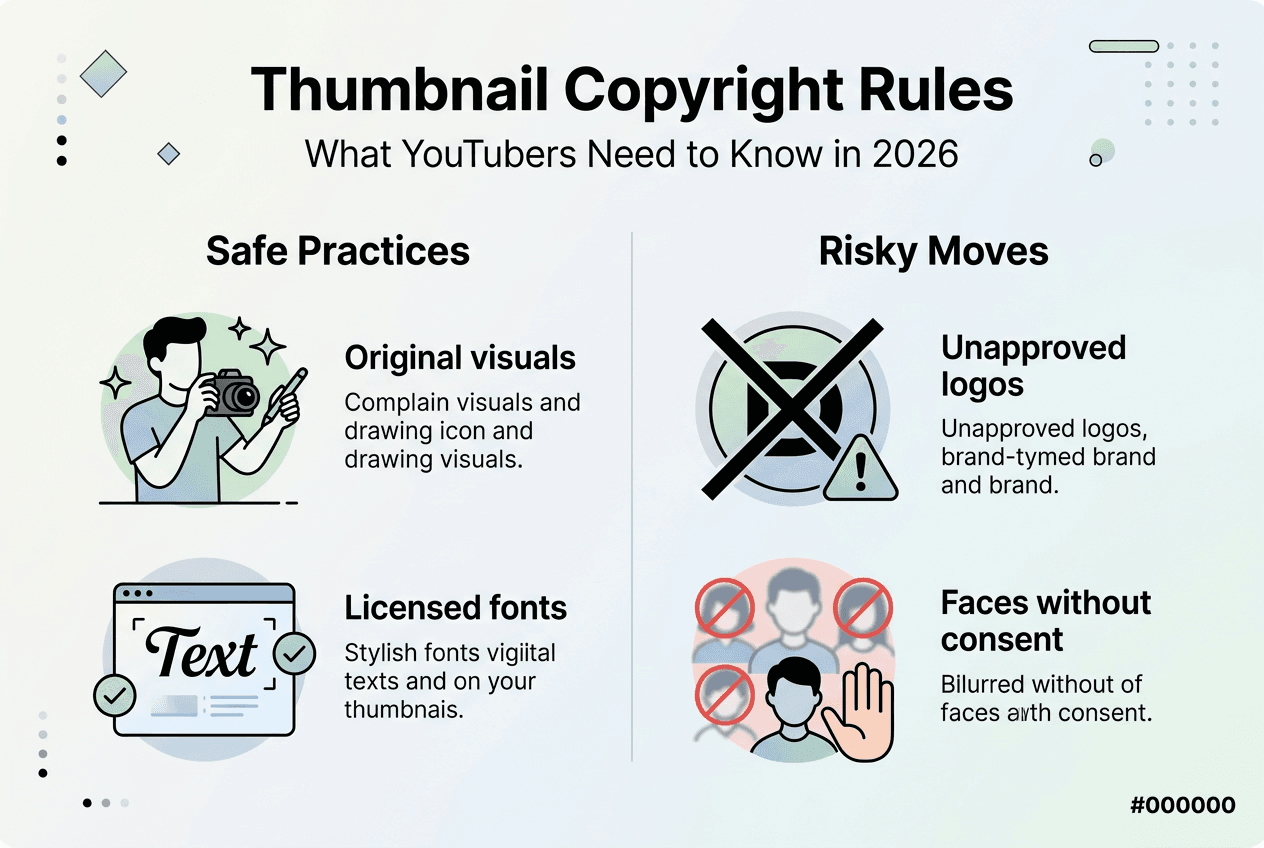
Font licensing deserves careful attention because many commercial fonts restrict usage contexts. Free fonts from Google Fonts carry permissive licenses allowing commercial use in thumbnails. Commercial fonts from foundries like Adobe Fonts or MyFonts require reading the End User License Agreement to verify thumbnail usage is permitted. Some licenses allow desktop publishing but exclude digital advertising or web use. When in doubt, contact the font creator or choose a definitively free alternative.
Obtaining permission for copyrighted material requires written agreements specifying usage scope, duration, and compensation. Email exchanges can constitute binding licenses if they clearly identify the work, grant specific rights, and show mutual agreement. For celebrity or influencer likenesses, model releases provide legal protection against publicity rights claims. Professional photographers typically include model releases with their work, but verify this before using images featuring identifiable people. Creator rights and likeness laws vary by jurisdiction, making written permissions essential for commercial use.
| Do | Don't |
|---|---|
| Use royalty-free images from licensed sources | Screenshot copyrighted content without permission |
| Create original graphics and photography | Copy competitor thumbnails or visual styles |
| Obtain written permission for copyrighted material | Rely on "fair use" without legal analysis |
| Verify font licenses allow commercial use | Use celebrity likenesses without consent |
| Keep documentation of licenses and permissions | Assume credit or disclaimers provide protection |
YouTube's copyright rules require creators to own or license all assets in their thumbnails. The platform's Content ID system scans uploaded content, including thumbnails, for copyrighted material. While Content ID primarily targets video content, manual copyright claims can flag thumbnails. Copyright holders monitor their intellectual property across platforms, and distinctive images make unauthorized uses easy to identify. Proactive compliance prevents strikes and maintains your channel's good standing.
Pro Tip: Create a thumbnail asset library with properly licensed images, fonts, and graphics you can reuse across videos. Document each asset's license terms and source to quickly verify compliance if questions arise.
Collaborating with a YouTube thumbnail designer ensures professional quality while maintaining legal compliance. Designers understand copyright requirements and source materials appropriately. They create original compositions that capture attention without infringing others' rights. Professional design also improves click-through rates by applying color theory, composition principles, and platform-specific optimization. Investing in compliant design protects your channel and enhances performance.
Get professional, copyright-safe thumbnails designed for maximum impact
Navigating copyright law while creating compelling thumbnails challenges even experienced creators. You need visuals that grab attention in crowded feeds, communicate your video's value instantly, and comply with complex intellectual property requirements. Balancing these demands while maintaining consistent upload schedules stretches your time and creative resources thin.
Professional thumbnail design eliminates copyright risks while boosting your video performance. Expert designers at YouTube thumbnail designer create original, eye-catching thumbnails using properly licensed assets and custom graphics. You get peace of mind knowing every element complies with copyright law, plus visuals optimized for maximum click-through rates. Save hours researching licenses and designing layouts while getting thumbnails that outperform DIY attempts. Focus your energy on creating great content while professionals handle the visual marketing that drives views to your channel.
FAQ
What if I use a copyrighted image in my thumbnail by accident?
Accidental use still constitutes copyright infringement under U.S. law because infringement is a strict liability offense. Intent doesn't matter for determining liability. Remove the infringing thumbnail immediately upon discovery and replace it with properly licensed content. If the copyright holder has already filed a claim, respond promptly explaining the mistake and showing you've corrected it. Demonstrating good faith may encourage them to withdraw the claim, though they're not legally required to do so. Prevention through careful verification before publishing protects you better than damage control after infringement.
Can I claim fair use for any thumbnail I create?
Fair use applies on a case-by-case basis after evaluating four statutory factors: purpose and character of use, nature of the copyrighted work, amount used, and market effect. Courts scrutinize commercial uses like thumbnails more strictly than educational or nonprofit uses. Simply using copyrighted material to promote your video rarely qualifies as fair use because it serves the same commercial purpose as the original. Transformative uses that add commentary, criticism, or new meaning receive stronger protection, but fair use remains a legal defense you must prove in court, not automatic permission. Consult an attorney before relying on fair use for valuable content.
Is it enough to credit the original owner in my thumbnail description?
Crediting the copyright holder does not replace obtaining proper permission or licensing. Attribution doesn't prevent infringement claims because copyright grants exclusive rights to reproduce, distribute, and create derivative works. Only the copyright holder can authorize these uses through explicit permission or license. Disclaimers like "no copyright infringement intended" similarly provide no legal protection. If you want to use someone else's copyrighted work, negotiate a license agreement specifying usage terms and compensation. Credit might satisfy attribution requirements in some licenses, but it never substitutes for obtaining the underlying rights.
How does YouTube detect copyright issues in thumbnails?
YouTube uses automated Content ID systems and manual reporting to identify copyrighted material in thumbnails and videos. Copyright holders can submit takedown notices through YouTube's webform when they discover unauthorized uses. The platform also employs image recognition technology that can match thumbnails against databases of copyrighted content. Once YouTube receives a valid copyright claim, they remove the content and issue a strike against your channel. Three strikes within 90 days results in channel termination. Repeated infringement signals pattern misconduct that triggers escalating penalties including upload restrictions and monetization suspension.